
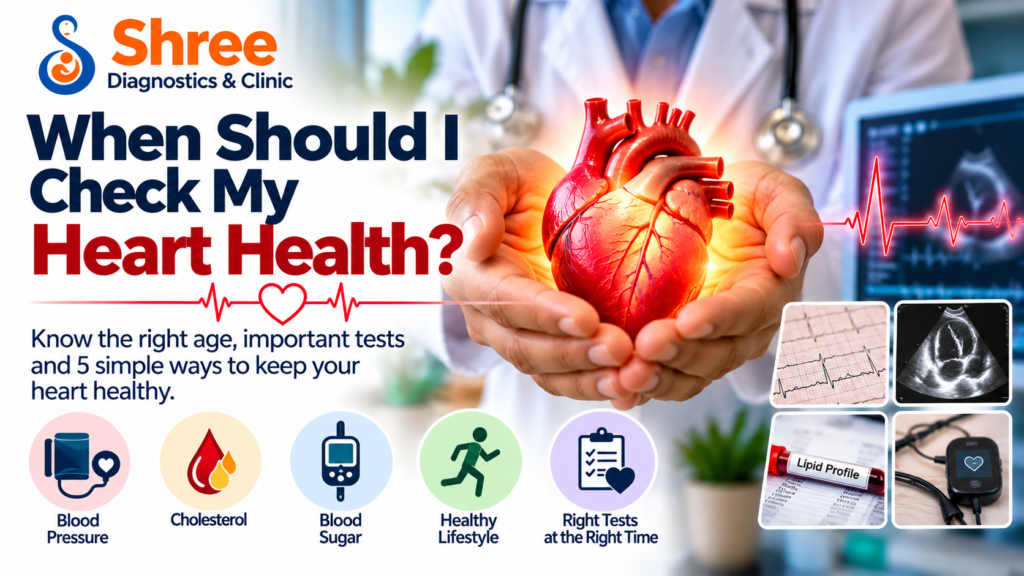
You should start paying attention to your heart health from early adulthood rather than waiting for symptoms to appear. Regular monitoring of blood pressure, cholesterol, blood sugar and other cardiovascular risk factors becomes increasingly important with age and if you have diabetes, high blood pressure, obesity, smoking or tobacco exposure, kidney disease, or a family history of premature heart disease.
The right heart tests depend on your symptoms, medical history and individual risk; an ECG, echocardiogram or Holter monitor is not automatically required simply because you have reached a certain age.
Quick Answer: When Should I Check My Heart Health?
There is no single age at which everyone needs the same heart tests.
A sensible approach is to know your cardiovascular risk early, monitor important health numbers regularly, and seek medical advice sooner if you have symptoms or risk factors.
The American Heart Association recommends cardiovascular risk-factor screening that includes measurements such as blood pressure, cholesterol, blood glucose, body weight and lifestyle factors. Cholesterol screening begins in adulthood, while the frequency of follow-up depends on individual risk.
The U.S. Preventive Services Task Force recommends blood-pressure screening for adults aged 18 years and older, with more frequent screening generally appropriate for adults aged 40 years or older or people at increased risk.
So, rather than asking only “When should I get an ECG?”, a better question is:
“What is my cardiovascular risk, and which checks are appropriate for me?”
At What Age Should I Start Checking My Heart Health?

Heart-health awareness should not begin only after 40 or 50.
In your 20s and 30s
This is a good time to establish your baseline.
Important things to monitor include:
- Blood pressure
- Cholesterol
- Weight and waist circumference when appropriate
- Blood glucose when indicated
- Smoking or tobacco use
- Physical activity
- Diet
- Family history of cardiovascular disease
The AHA states that cholesterol screening begins at age 20 and that follow-up frequency depends on cardiovascular risk.
Around age 40 and beyond
Cardiovascular risk assessment becomes particularly important.
Your healthcare professional may consider your:
- Blood pressure
- Cholesterol
- Blood glucose/diabetes status
- Smoking history
- Weight
- Kidney health
- Family history
- Other medical conditions
The AHA notes that after age 40, clinicians can use cardiovascular-risk calculations together with cholesterol and other health information to estimate future risk.
The updated 2026 ACC/AHA dyslipidemia guidance also emphasizes earlier assessment and management of cardiovascular risk and uses the PREVENT-ASCVD equations for appropriate adults aged 30–79 in primary prevention.
After 60
Age itself becomes an important cardiovascular risk factor, but there is still no universal “one-size-fits-all” heart-test schedule.
The appropriate frequency and type of testing depend on your health status, risk factors, medications, symptoms and previous cardiovascular history.
Should I Check My Heart Even If I Feel Healthy?

Yes—heart-health screening is not only for people who have symptoms.
High blood pressure and abnormal cholesterol may exist without obvious symptoms. The AHA identifies blood pressure, cholesterol, blood glucose, body weight, physical activity, diet, smoking and sleep as important aspects of cardiovascular health.
This is why prevention is different from waiting for a problem.
You may feel completely normal while having:
- High blood pressure
- High LDL cholesterol
- Prediabetes or diabetes
- Obesity
- An unhealthy lipid profile
- A significant family history
- Other cardiovascular risk factors
Early identification gives you an opportunity to discuss lifestyle changes, monitoring or treatment with a healthcare professional.
5 Situations When You Should Pay More Attention to Your Heart Health
1. You are getting older
Cardiovascular risk generally changes with age.
However, age alone should not determine which diagnostic tests you receive.
Your age should be considered together with your overall cardiovascular risk.
2. You have high blood pressure, cholesterol or blood sugar
These are important cardiovascular risk factors.
High blood pressure can occur without symptoms, which is why measurement matters. The USPSTF recommends screening adults aged 18 years and older for hypertension.
High cholesterol and high blood glucose can also increase cardiovascular risk.
If one of these numbers is abnormal, your healthcare professional may recommend more frequent monitoring or additional assessment.
3. You smoke or use tobacco
Tobacco use is a major modifiable cardiovascular risk factor.
WHO identifies tobacco use, unhealthy diet, physical inactivity, harmful alcohol use and obesity among important contributors to cardiovascular disease.
If you smoke or use tobacco, speak with a healthcare professional about quitting.
4. You have a family history of early heart disease
Family history can influence cardiovascular risk.
Tell your doctor if a close family member had:
- Heart attack at a relatively young age
- Stroke
- Very high cholesterol
- Known familial hypercholesterolemia
- Other inherited cardiovascular conditions
Your family history may influence when and how your cardiovascular risk should be assessed.
5. You develop symptoms
Do not wait for your next routine check-up if you develop concerning symptoms.
Possible warning symptoms include:
- Chest pressure or discomfort
- Breathlessness
- Palpitations or a racing/irregular heartbeat
- Fainting or near-fainting
- Unexplained or unusual fatigue
- Reduced exercise tolerance
- Swelling of the legs
Symptoms can have many causes and do not automatically mean heart disease.
However, new, severe or concerning symptoms deserve medical evaluation.
Emergency warning
Severe or persistent chest discomfort, significant difficulty breathing, fainting, or symptoms suggestive of a heart attack require urgent medical attention rather than a routine diagnostic appointment.
Top 5 Things You Should Do for Your Heart Health

1. Know Your Blood Pressure
Blood pressure is one of the simplest and most important cardiovascular measurements.
High blood pressure often has no obvious symptoms, so you cannot reliably know whether it is high simply by how you feel.
The USPSTF recommends screening adults aged 18 years and older for hypertension. It suggests annual screening for adults aged 40 years or older and adults at increased risk, while lower-risk adults aged 18–39 with previously normal readings may be screened less frequently.
Takeaway:
Don’t wait for symptoms before checking your blood pressure.
2. Know Your Cholesterol
A lipid profile can measure:
- Total cholesterol
- LDL cholesterol
- HDL cholesterol
- Triglycerides
The AHA recommends cholesterol assessment beginning in adulthood, with the frequency of follow-up depending on individual risk.
A useful 2026 update: Lp(a)
The 2026 ACC/AHA cholesterol guidance recommends that every adult have Lipoprotein(a), or Lp(a), measured at least once in adulthood. Lp(a) is substantially influenced by genetics and can contribute to cardiovascular risk assessment.
This does not mean everyone needs repeated Lp(a) testing.
3. Keep Blood Sugar Under Control
Blood glucose is also part of cardiovascular health.
Diabetes and abnormal glucose metabolism can increase cardiovascular risk.
Depending on your age, weight and risk factors, your healthcare professional may recommend:
- Fasting blood glucose
- HbA1c
- Other diabetes-related testing
The AHA identifies blood glucose as an important cardiovascular-health measure.
Takeaway:
Heart health and metabolic health are closely connected.
4. Move More, Eat Better and Avoid Tobacco
Heart health is not created by diagnostic tests alone.
WHO identifies unhealthy diet, physical inactivity, tobacco use and harmful alcohol use as important behavioural cardiovascular risk factors. It also highlights obesity and related increases in blood pressure, blood glucose and blood lipids as important risk pathways.
Practical steps include:
- Stay physically active
- Eat more vegetables and fruit
- Choose a balanced diet
- Limit excess salt, sugar and unhealthy fats
- Avoid tobacco
- Maintain a healthy weight
- Get adequate sleep
- Follow medical advice if you already have high BP, diabetes or cholesterol problems
5. Get the Right Heart Test for the Right Reason
This is one of the most important points.
Not everyone needs an ECG, Echo or Holter test simply because they have crossed 40.
Different tests answer different questions.
ECG
An electrocardiogram records the heart’s electrical activity and can help evaluate rhythm and other electrical abnormalities.
Echocardiogram
An echocardiogram uses ultrasound to evaluate the heart’s structure and function.
Holter Monitoring
A Holter monitor records the heart rhythm continuously over a longer period and may be useful when intermittent rhythm problems are suspected.
Blood Tests
Blood tests can assess cardiovascular risk factors such as:
- Cholesterol
- Triglycerides
- Blood glucose
- HbA1c when indicated
- Lp(a), when appropriate
The appropriate combination should be determined according to your symptoms, medical history and cardiovascular risk.
For asymptomatic adults at low cardiovascular risk, routine ECG screening has not been shown to provide sufficient benefit and can lead to unnecessary follow-up from false-positive findings.
What Are the Most Important Heart-Health Numbers to Know?
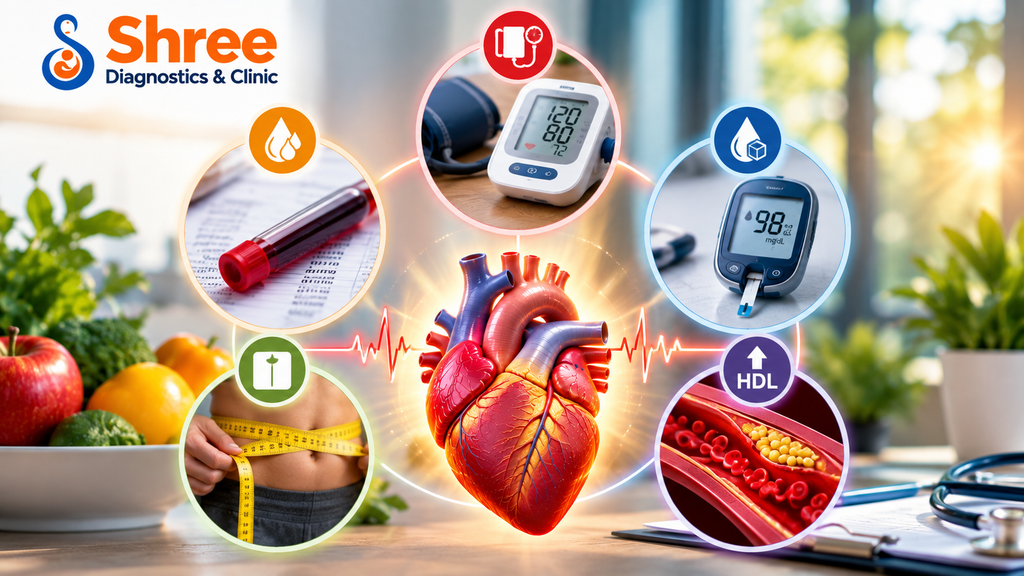
Think of these as your cardiovascular dashboard:
1. Blood pressure
Know your blood-pressure readings and whether they are consistently within the range your healthcare professional considers appropriate for you.
2. LDL cholesterol
LDL is one of the key cholesterol measurements used in cardiovascular-risk assessment.
3. HDL cholesterol and triglycerides
These are also included in a standard lipid profile and help provide a broader picture of lipid health.
4. Blood glucose / HbA1c
These help assess glucose metabolism and diabetes risk when testing is appropriate.
5. Weight and waist circumference
Body weight and, when appropriate, waist circumference can provide additional information about metabolic and cardiovascular risk.
These measurements should be interpreted together rather than treating one number as the complete picture of heart health.
Heart Health Check: What Should You Actually Test?
There is no single universal “heart test.”
Your healthcare professional may consider different assessments depending on your situation.
| Assessment | What it helps assess |
| Blood pressure | Hypertension and cardiovascular risk |
| Lipid profile | Cholesterol and triglycerides |
| Blood glucose / HbA1c | Diabetes and metabolic risk |
| Lp(a) | Inherited cardiovascular-risk information |
| ECG | Heart electrical activity and rhythm |
| Echocardiogram | Heart structure and function |
| Holter monitoring | Heart rhythm over an extended period |
| Additional cardiac testing | Selected according to symptoms and clinical risk |
Important: An abnormal result does not automatically mean that you have heart disease. Results need to be interpreted in clinical context.
Heart Health by Age: A Simple Framework
| Age / situation | What to focus on |
| 18–29 | Establish healthy habits; monitor BP and cardiovascular risk factors; discuss cholesterol and other screening with your healthcare professional |
| 30–39 | Continue BP, cholesterol and metabolic-risk assessment; pay attention to smoking, weight, activity and family history |
| 40–49 | More formal cardiovascular-risk assessment becomes increasingly relevant; monitor BP, cholesterol and glucose as appropriate |
| 50–59 | Continue individualized cardiovascular-risk assessment and management |
| 60+ | Continue individualized monitoring based on health status, medications, symptoms and risk factors |
| Any age + symptoms | Seek appropriate medical evaluation rather than waiting for routine screening |
| Any age + major risk factors | Discuss whether earlier or more frequent assessment is appropriate |
This is a general educational framework, not a personal medical screening schedule.
Do I Need an ECG Every Year After 40?
Not automatically.
Reaching 40 does not by itself mean that every person needs an annual ECG.
An ECG may be appropriate when a healthcare professional has a clinical reason to investigate symptoms, an abnormal examination, a suspected rhythm problem or another relevant concern.
For asymptomatic adults at low risk, routine ECG screening is not recommended by the USPSTF because the potential harms of unnecessary follow-up can outweigh the benefits.
So instead of asking:
“Am I over 40, so do I need an ECG?”
ask:
“What is my cardiovascular risk, and is an ECG appropriate for me?”
What Are the Most Common Questions About Heart Health?
Based on current search-oriented medical content and recurring patient questions, these are useful questions to answer directly on the page:
1. When should I check my heart health?
Start cardiovascular risk assessment in adulthood and continue according to your age, risk factors and medical history. Do not wait for symptoms if you have significant risk factors.
2. At what age should I get a heart check-up?
There is no single universal age for every cardiac test. Cardiovascular risk-factor assessment starts in adulthood, while additional testing depends on individual risk and symptoms.
3. How often should I check my heart health?
The frequency depends on what is being checked and your individual risk. Blood pressure, cholesterol and glucose do not all follow the same schedule, and people with elevated risk may need more frequent monitoring.
4. What tests check heart health?
Depending on the situation, evaluation may include blood pressure measurement, lipid profile, glucose/HbA1c, ECG, echocardiography or Holter monitoring.
5. Can heart problems exist without symptoms?
Yes. Some important cardiovascular risk factors, particularly high blood pressure and abnormal cholesterol, may have no obvious symptoms.
6. Do I need an ECG if I feel completely healthy?
Not necessarily. Whether an ECG is appropriate depends on your individual circumstances. Routine ECG screening is not recommended for asymptomatic adults at low risk.
7. Does family history matter?
Yes. A family history of premature cardiovascular disease or inherited cholesterol disorders can influence cardiovascular-risk assessment.
8. Is cholesterol really connected to heart health?
Yes. Cholesterol—particularly LDL cholesterol—is an important cardiovascular-risk factor and should be interpreted together with other risk factors.
9. Should everyone get an Lp(a) test?
Current 2026 ACC/AHA guidance recommends measuring Lp(a) at least once in adulthood. Your healthcare professional can determine how the result should be interpreted alongside your other risk factors.
10. When should I seek urgent help?
New or severe chest discomfort, significant breathing difficulty, fainting or other potentially serious cardiac symptoms should be evaluated urgently rather than waiting for a routine health check.
When Should You Speak to a Doctor About Your Heart?

Consider discussing your cardiovascular health with a healthcare professional if you:
- Have consistently high blood pressure
- Have high cholesterol
- Have diabetes or abnormal blood sugar
- Smoke or use tobacco
- Are overweight or obese
- Have kidney disease
- Have a strong family history of early cardiovascular disease
- Experience unexplained palpitations
- Develop chest discomfort
- Become unusually breathless
- Experience fainting or near-fainting
- Notice a significant reduction in your usual exercise tolerance
Your healthcare professional can determine whether you need basic screening, lifestyle counselling, medication, ECG, echocardiography, Holter monitoring or another form of evaluation.
Heart Health Testing at Shree Diagnostics & Clinic
At Shree Diagnostics & Clinic, heart-related diagnostic services include:
ECG • Echocardiography • Holter Monitoring • Blood Tests • Lipid Profile • HbA1c and other relevant laboratory investigations
The appropriate test should be selected according to your symptoms, medical history and healthcare professional’s advice.
Know your numbers. Understand your risk. Take care of your heart.
Shree Diagnostics & Clinic
58/3 Lakshmi Narayan Tala Road, Near B. College 2nd Gate, Howrah – 711103
Phone: 8910830805 / 8100606500
Website: www.shreediagnostics.in
Medical Disclaimer
This article is intended for general health education and does not replace consultation with a qualified healthcare professional.
Heart-health screening is individualized. Age, symptoms, family history, existing conditions, medications and cardiovascular risk factors can all affect which tests are appropriate.
If you have severe or potentially life-threatening symptoms, seek urgent medical care rather than relying on an online article or routine diagnostic appointment.