
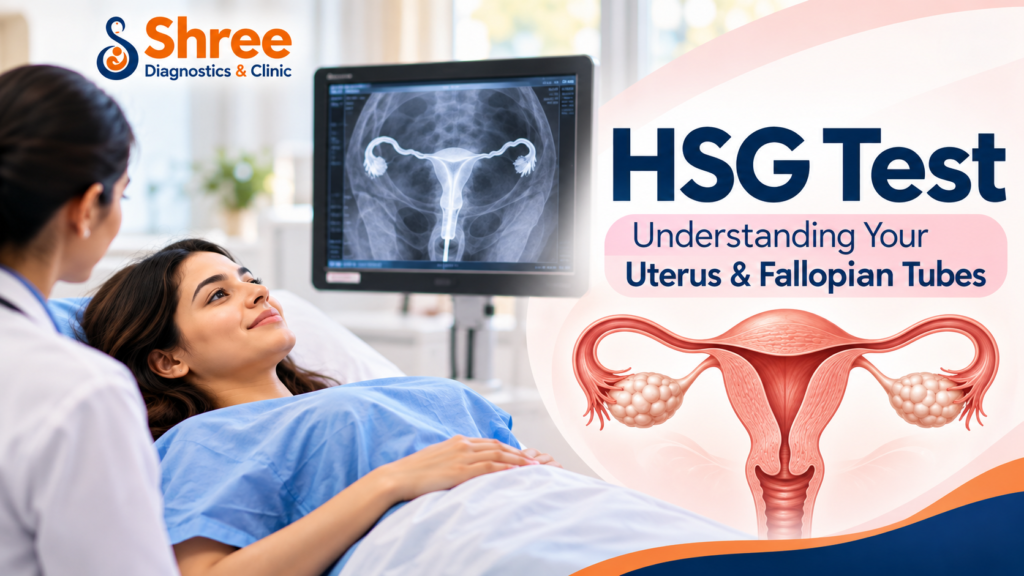
Learn about the HSG test in Howrah, including why it is done for fertility evaluation, how the procedure works, preparation, discomfort, risks and what the results may show
When a couple is having difficulty conceiving, doctors may recommend several investigations to understand possible reasons. One of these tests is Hysterosalpingography, commonly known as HSG.
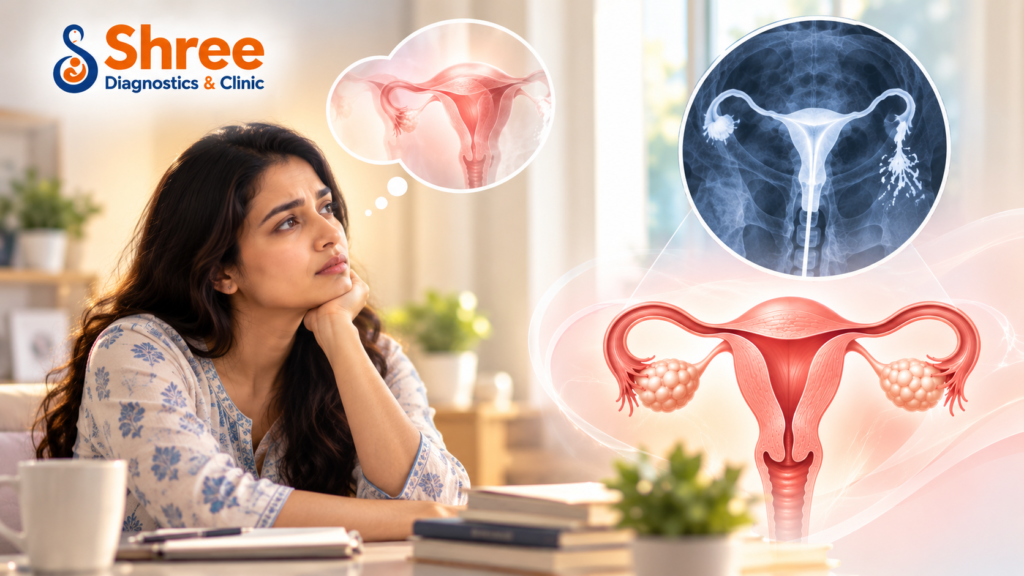
HSG is a specialised X-ray examination that helps doctors assess the uterus and fallopian tubes. In particular, it can show whether the fallopian tubes are open and allow the doctor to evaluate the shape and internal outline of the uterine cavity.
At Shree Diagnostics & Clinic, HSG Contrast X-ray is included among the available investigations.
What is an HSG Test?
HSG stands for Hysterosalpingography.
It is an imaging test that combines X-ray imaging with a contrast liquid. The contrast helps outline the inside of the uterus and fallopian tubes so that their structure and passage can be seen more clearly on X-ray images.
One of the main questions an HSG can help answer is:
Are the fallopian tubes open or blocked?
This is important because the fallopian tubes provide the pathway through which the egg and sperm meet and through which the fertilised egg travels toward the uterus.

Why is HSG Done?
HSG is commonly considered as part of an infertility evaluation, particularly when doctors need information about the fallopian tubes or the uterine cavity.
An HSG may help identify:
- Blockage or narrowing of the fallopian tubes
- Certain abnormalities in the shape of the uterine cavity
- Uterine adhesions or scarring
- Some structural abnormalities of the uterus
- Changes associated with previous tubal procedures or surgery
- Certain uterine abnormalities that may be relevant in cases of recurrent miscarriage
However, HSG is only one part of a fertility evaluation. A normal HSG does not automatically mean that every aspect of fertility is normal.
How is an HSG Test Performed?
HSG is generally performed as an outpatient procedure.
The process usually involves the following steps:
1. Positioning
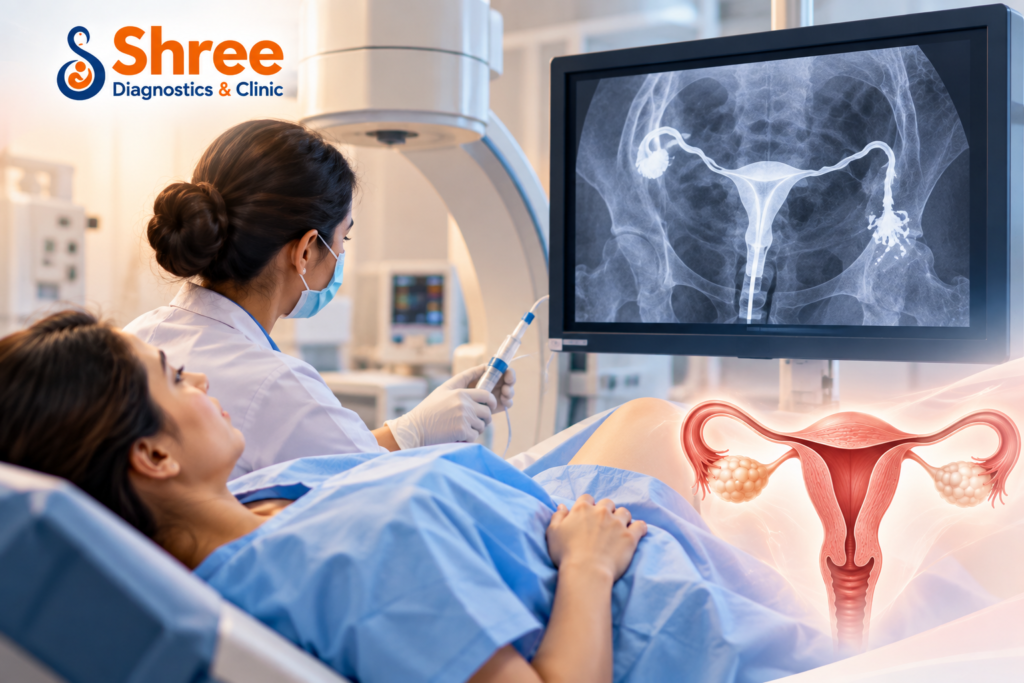
The patient lies on an X-ray examination table in a position similar to that used during a routine gynaecological examination.
2. Examination of the cervix
A speculum is gently inserted to provide access to the cervix. The area is cleaned before the next step.
3. Insertion of a small catheter
A thin catheter is carefully placed through the cervix into the uterus.
4. Contrast injection
A special contrast liquid is introduced through the catheter. The contrast outlines the uterine cavity and, if the tubes are open, passes through the fallopian tubes.
5. X-ray imaging
Fluoroscopy, which provides real-time X-ray imaging, is used to observe the movement of the contrast and capture the required images. The patient may be asked to change position slightly during the examination.
6. Completion
Once the necessary images have been obtained, the catheter is removed and the procedure is completed.
The actual examination generally takes around 30 minutes, although the total time at the diagnostic centre may be longer.
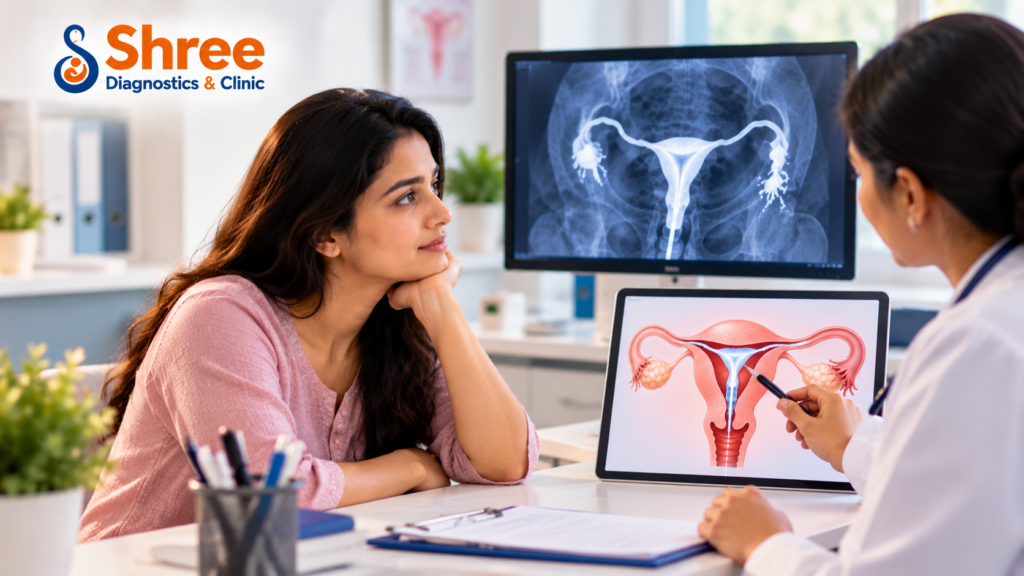
Is HSG Painful?
This is one of the most common concerns before an HSG.
The experience can vary from person to person. Some women experience mild cramping or discomfort, particularly when the catheter is inserted or when the contrast is introduced. The discomfort is generally brief.
Some women may also notice:
- Period-like cramps
- Mild lower abdominal discomfort
- A small amount of vaginal spotting after the examination
These symptoms can occur after HSG, but individual experiences differ.
If you are concerned about discomfort, discuss pain-relief options with your doctor before the examination rather than taking medication on your own.
When is HSG Usually Performed?
The timing of HSG is important because the examination should not be performed when pregnancy is suspected.
Radiology guidance commonly recommends scheduling HSG about 7–10 days after the first day of the menstrual period and before ovulation, although the exact timing may vary according to the doctor or diagnostic centre’s protocol.
Your doctor or diagnostic centre will provide specific instructions based on your menstrual cycle.
How Should You Prepare for an HSG?
Before an HSG, inform your doctor or radiology team about:
- Any possibility of pregnancy
- Previous or current pelvic infection
- Any untreated sexually transmitted infection
- Allergies, particularly previous reactions to iodinated contrast
- Current medicines
- Recent illnesses or medical conditions
You may also be advised about pain-relief medication before the examination.
Preparation instructions can vary between centres, so it is important to follow the instructions provided for your appointment.
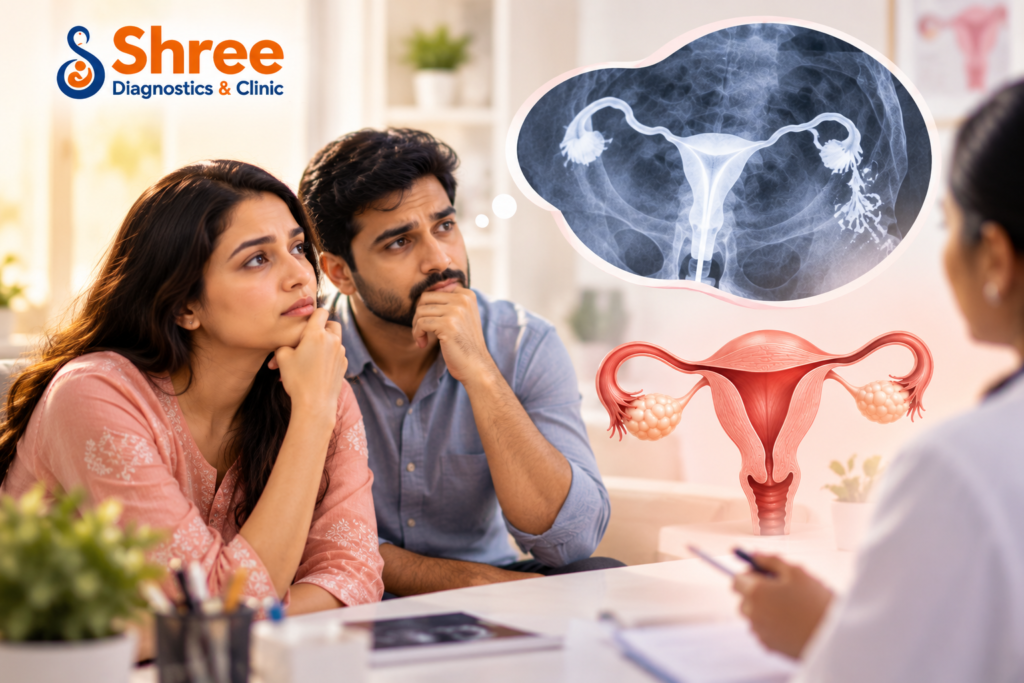
What Can an HSG Report Show?
The HSG images allow the radiologist to assess the appearance of the uterine cavity and the passage of contrast through the fallopian tubes.
Depending on the findings, the report may provide information about whether:
The fallopian tubes appear patent:
Contrast passes through the tubes, suggesting that they are open.
A tube appears blocked:
Contrast does not pass normally through part or all of the tube, which may suggest obstruction.
The uterine cavity has an abnormal appearance:
Certain structural changes, such as adhesions, polyps, fibroids affecting the cavity, or congenital uterine abnormalities, may sometimes be identified.
The findings should always be interpreted along with the patient’s symptoms, medical history and other fertility investigations.
Does a Normal HSG Mean There Is No Fertility Problem?
No.
HSG mainly evaluates the uterine cavity and fallopian tubes. Fertility can be influenced by many other factors that HSG cannot assess.
For example, HSG does not evaluate every aspect of:
- Ovulation
- Ovarian function
- Sperm quality
- Egg quality
- Embryo development
- Implantation
- Other conditions involving the ovaries or surrounding pelvic structures
Depending on the individual situation, a doctor may recommend additional investigations such as ultrasound, blood tests, semen analysis or other examinations.
Therefore, an HSG should be viewed as one component of a complete fertility assessment, rather than a single test that can explain every cause of difficulty conceiving.
Is HSG Safe?
HSG is considered a minimally invasive diagnostic procedure, and serious complications are uncommon.
Because HSG uses X-rays, it involves a small amount of ionising radiation. Modern imaging practices are designed to keep radiation exposure as low as reasonably achievable while obtaining the required diagnostic information.
It is particularly important to tell your doctor if:
- You may be pregnant
- You have a pelvic infection
- You have an untreated infection
- You have previously experienced an allergic reaction to iodinated contrast
These details help the medical team determine whether the examination is appropriate for you.
What Happens After the HSG?
Most patients can return home after the examination because HSG is generally performed on an outpatient basis.
Some temporary cramping or light spotting may occur. If you experience unusual or persistent symptoms after the procedure, contact your doctor or healthcare provider for advice.
Your HSG images are reviewed by a radiologist, who prepares the imaging report. Your referring doctor can then interpret the findings in the context of your overall fertility evaluation.
HSG and Infertility: What Should Patients Remember?
Being advised to undergo an HSG does not necessarily mean that a serious problem has been found.
The purpose of the examination is to obtain specific information about the uterus and fallopian tubes that may help your doctor understand your reproductive health and decide what should be considered next.
An HSG can therefore be an important diagnostic step when investigating difficulty in becoming pregnant, but its results should always be considered together with the rest of the clinical evaluation.
Frequently Asked Questions About HSG
1. What does HSG stand for?
HSG stands for Hysterosalpingography, an X-ray examination used to assess the uterus and fallopian tubes.
2. Is HSG done for infertility?
Yes. HSG is commonly used as part of an evaluation when a woman is having difficulty becoming pregnant, particularly to assess whether the fallopian tubes are open.
3. Does HSG check the ovaries?
No. HSG primarily evaluates the uterine cavity and fallopian tubes. Other investigations may be required to assess the ovaries and other reproductive structures.
4. Can HSG detect blocked fallopian tubes?
Yes. One of the main purposes of HSG is to assess whether contrast can pass through the fallopian tubes, helping identify possible tubal blockage.
5. How long does an HSG take?
The examination itself generally takes around 30 minutes, although you should allow additional time for registration and preparation.
6. Can HSG be performed during pregnancy?
HSG should not be performed when pregnancy is suspected. Always inform your doctor or radiology team if there is any possibility that you may be pregnant.
7. Is some cramping normal after HSG?
Mild, short-lasting cramping can occur during or after the examination, and some women may experience light spotting.
Final Takeaway
HSG is a specialised diagnostic X-ray examination that gives doctors valuable information about the uterus and fallopian tubes. It is frequently used during fertility evaluation to check whether the fallopian tubes are open and to identify certain abnormalities within the uterine cavity.
If your doctor has recommended HSG, understanding the procedure and following the centre’s preparation instructions can help you approach the examination with greater confidence.
Medical Disclaimer: This article is intended for general educational purposes and should not replace consultation with a qualified gynaecologist, fertility specialist or radiologist. The decision to undergo HSG should be based on your individual medical history and your doctor’s advice.
HSG Test at Shree Diagnostics & Clinic 🩻
HSG (Hysterosalpingography) is available at Shree Diagnostics & Clinic, performed under the guidance of an experienced radiology team.
👩⚕️ HSG Test by Expert Doctor
🔍 Advanced imaging for evaluation of the uterus & fallopian tubes
📅 To book your appointment, call us now:
📞 8910830805 / 8100606500
Take the right step towards understanding your reproductive health. 💙